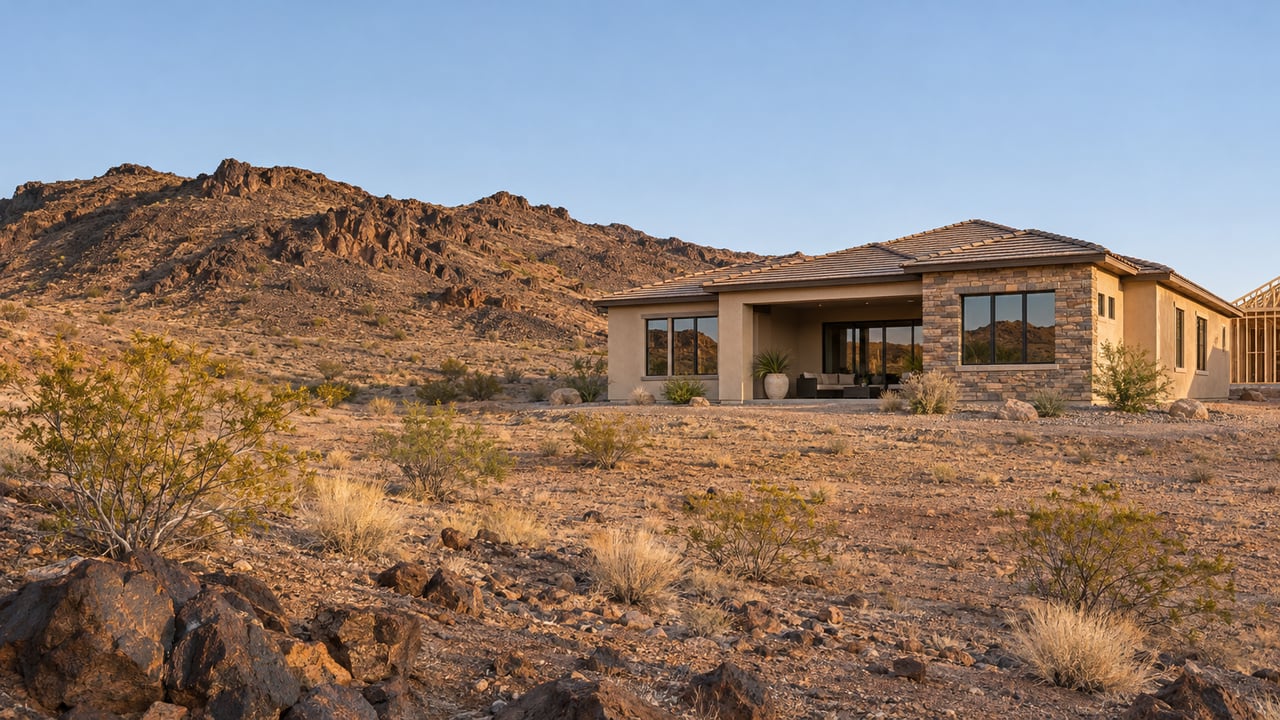
Boulder City's Growth Cap Rarely Fills. Land and Sales Pace Decide How Many New Homes Get Built
November 12, 2026
"Over the past several years the city has received few allotment requests for new residential construction," then-Acting City Manager Michael Mays wrote in an email the Boulder City Review published in January 2025. He counted "only 37 requests in the past three years, keeping us well-below the 120 permitted annually by the controlled growth ordinance."
Most people know one thing about building in Boulder City: the town caps new homes at 120 a year. If you're comparing Boulder City with Henderson or the rest of the valley and wondering why so few new homes come to market, the yearly cap doesn't explain it. It almost never fills. Two other limits do the work. The first is land. The second is a per-project pace that ties construction to how fast homes sell. Together they explain the new-construction prices in town right now.
Boulder City passed its Growth Ordinance in 1979. The Boulder City Review explained it plainly in October 2025: it doesn't mean zero growth, it means limited and slow growth. No more than 120 new homes go up in any year. Construction years follow the city's fiscal year, July 1 through June 30.
Before a builder can get a building permit, it has to apply for an "allotment" under the ordinance. In early 2025 the city's Allotment Committee scored Beazer Homes' proposed subdivision at 89% as part of that review. But 37 requests across three years averages out to roughly a dozen a year, against room for 120. During those years the cap had plenty of slack. Something earlier in the process was holding supply down.
The Review's January 2025 primer on the ordinance listed the barriers in order, and land came first. There is very little undeveloped private land in the city. The Beazer subdivision itself sits on land that another developer bought first and later sold to Beazer. The city can't sell more than one acre of its own land without a vote of residents.
That vote requirement explains how the town's biggest current project came about. Tract 350 was city-owned land, and voters approved its sale in 2010. In September 2023 the council chose Toll Brothers' 122-lot, $21.1 million option as the basis for appraisal. In May 2024 the council unanimously approved the sale plan at $21.1 million, with the price adjusted by about $100,000 for each home below 122. Fourteen years passed between the vote and the approved sale plan. In a town where so little land is private, how much new housing gets built depends on how often parcels like this reach a ballot and then a builder.
Even after a builder secures land, the ordinance limits how fast one project can build. The Review reported in October 2025 that in practice no single developer can get more than 30 allotments in a construction year. In October 2025 the council named the Tract 350 project Liberty Ridge. It sits directly next to the earlier StoryBook Homes development. Toll Brothers bought StoryBook, so the city counts the two brands as one developer.
Toll Brothers asked for 30 allotments for each of the construction years ending June 30, 2025 and June 30, 2026, and the council approved them. Mays, by then deputy city manager, laid out what a full build-out could look like in theory:
| Construction year ending June 30 | Allotments in the city's theoretical schedule |
|---|---|
| 2025 | 30 |
| 2026 | 30 |
| 2027 | 30 |
| 2028 | 30 |
| 2029 | 2 |
| Total | 122 |
The schedule is only a theory because allotments expire. A builder has one year from council approval to pull permits, and unused allotments are lost. "Toll Brothers is very likely to lose allotments each construction year as construction is based on home sales," Mays told the Boulder City Review. He added that the builder will likely ask for more than two allotments in the 2028–29 year, and that slower sales could push the project into 2029–30.
So Liberty Ridge doesn't build out on a fixed calendar. The pace of buyers signing contracts sets the pace of permits, and the 30-per-year limit caps that pace from above. A builder whose largest project can never add more than 30 homes a year has little reason to cut prices to move volume.
Liberty Ridge opened on May 28, 2026. Its sales center is at Adams Boulevard and Bristlecone Drive. At opening, Toll Brothers described pricing in the upper $700,000s for the Windmarch collection and the low $900,000s for Crestfield. Across town, Beazer's 15-home tract near the south end of Arizona Street won council approval on January 28, 2025, and is now marketed as Heritage Peak at 385 Arizona Street.
These are the starting prices posted on the builders' community pages:
| Community / collection | Starting price | Plan sizes |
|---|---|---|
| Liberty Ridge, Windmarch | $799,995 | 2,691+ to 3,479+ sq. ft. |
| Liberty Ridge, Crestfield | $943,995 | 3,100+ to 3,664+ sq. ft. |
| Heritage Peak, community base | $849,990 | 2,880 to 3,180 sq. ft. |
| Heritage Peak, Somerset | $898,990 | Within community range |
| Heritage Peak, Windsor | $948,990 | Within community range |
Heritage Peak lists average lots of 12,000 square feet. When the tract went before the Allotment Committee in January 2025, the developer projected homes of 2,500 to almost 3,200 square feet priced between $700,000 and $800,000. The Boulder City Review also reported that several real estate professionals expected lot premiums and design upgrades to add another $125,000 or more, which would put many homes near $1 million. Today's starting price is already above that projected range, before any of those extras.
For a sense of scale, the Las Vegas REALTORS® September 2026 report put the regional median price for existing single-family homes at $470,000 in September 2026, unchanged from a year earlier. That figure covers resale homes across the whole region, not Boulder City alone. Still, a brand-new Boulder City home starting near $800,000 shows what it costs to buy into a town where new lots are rare and come to market a few dozen at a time.
Liberty Ridge sales are tied to a civic project. Under 2021 ballot questions, 10% of the Tract 350 sale proceeds go to public-safety capital improvements and the other 90% to a replacement aquatic facility. In February 2025, a city public-works column estimated the pool at about $36 million, with $25.5 million then on hand and the balance expected from the Tract 350 sale. In July 2025 the Boulder City Review reported a $1.6 million final-design contract. That plan called for design and permitting by summer 2026 and 18 months of construction, with completion expected in early-to-mid 2028. The paper also noted that earlier estimates had topped $40 million and could reach $44 million.
The November 2026 ballot questions covered other topics: data centers on part of the Eldorado Valley Transfer Area, and annual spending from the Capital Improvement Fund. Neither question dealt with residential land.
Consider these steps before you tour a model home:
Does Boulder City's cap mean new homes are almost impossible to get? No. The cap allows 120 homes a year, and in the three years before January 2025 the city received only 37 allotment requests. New homes are scarce mainly because land is scarce.
Why can't Liberty Ridge just build all 122 homes at once? A single development is limited to 30 allotments per construction year, and allotments expire if permits aren't pulled within a year.
Could more city land be sold for housing? City land sales over one acre require a vote of residents, so any large new parcel would have to go to the ballot first.
This post is general information about how Boulder City's growth rules work. It isn't legal or financial advice, so confirm your own situation with the right professional before you sign a contract.
New construction in Boulder City comes with allotment years, lot premiums and upgrade lists that change the real price of a home. If you want help comparing a Liberty Ridge or Heritage Peak contract against the resale homes on the market that same week, Marci R Wells will go through the numbers with you line by line. Let's Connect.
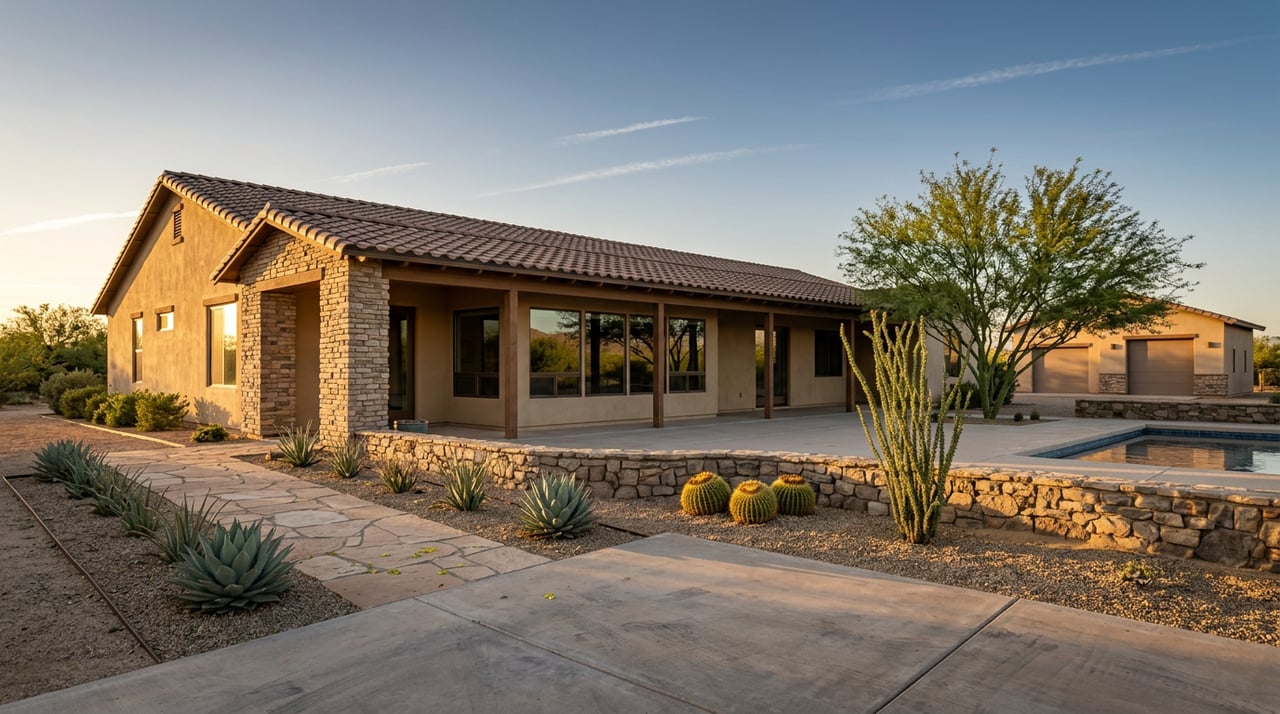
I offer more than years of experience in Pahrump real estate—I understand what it takes to bring a property together from the ground up. With a focus on rural acreage and new construction, I work closely with builders, developers, buyers, and sellers to help guide each opportunity from the right piece of land to the finished home. My approach is personal and attentive, with clear communication, thoughtful guidance, and hands-on service at every step.
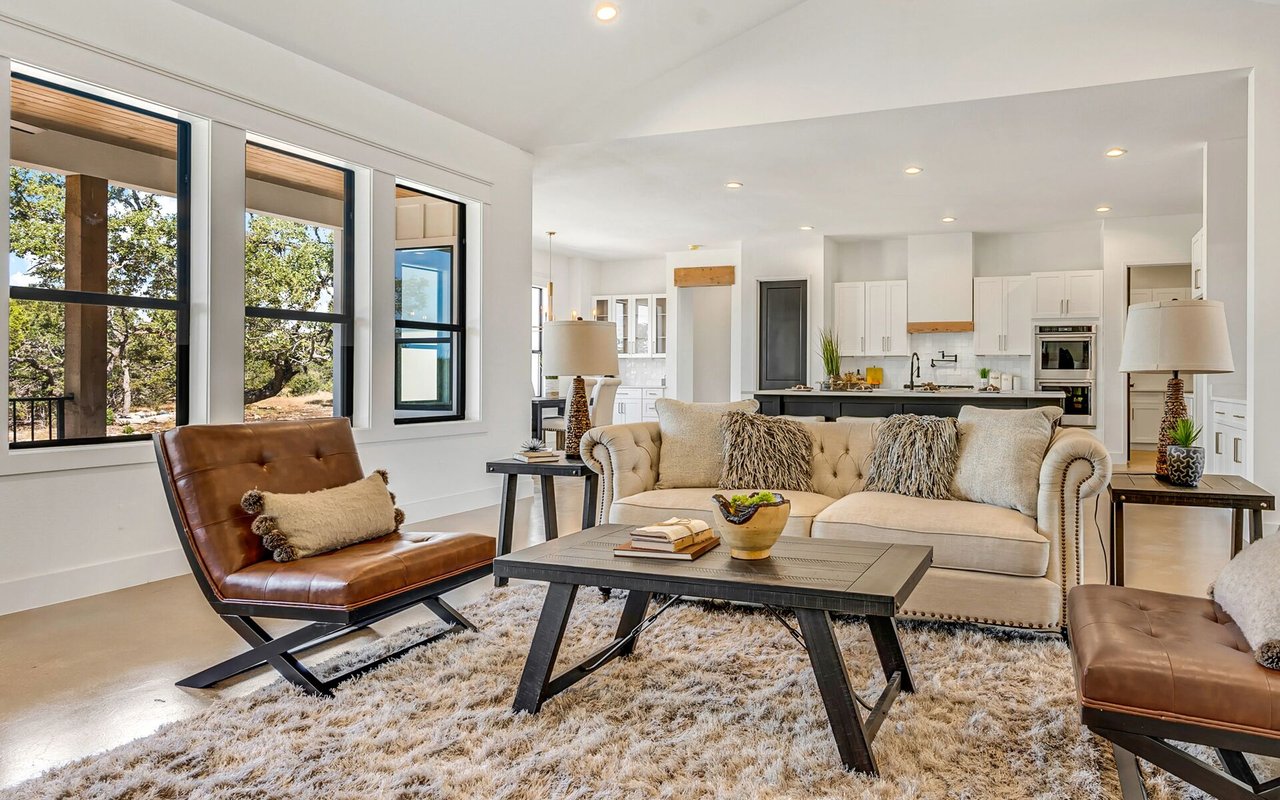
Marci R. Wells
3250 S NEVADA HWY 160 STE 11 PAHRUMP, NV 89048 MARCI RENE WELLS | NV #BS.0144996